
Why the maintenance of polished concrete is important
Well-maintained polished concrete retains its appearance and protective qualities for longer. Even though varnishes and waxes offer good resistance, they are not designed to withstand standing water, aggressive products or repeated friction without protection over the long term.
The objective is not to treat poured concrete as a fragile surface, but to adopt the right habits: clean regularly, avoid unsuitable products and deal quickly with any stains or accidents.
Beyond aesthetics, proper maintenance preserves the protection of poured concrete and extends its lifespan. Applied according to the rules by a qualified installer, Marius Aurenti thin poured concrete benefits from a guarantee of up to 15 years against cracking: taking care of it on a daily basis means preserving this investment over time.
How often should you maintain polished concrete?
Maintaining poured concrete doesn't require any special effort: it's simply organised according to a few regular rhythms.
- Everyday : Dust with a soft brush or a vacuum cleaner and wipe away any splashes (water, grease, cleaning products) straight away.
- Every week mop with a well-wrung-out mop and a mild cleaner suitable for polished concrete, then rinse with clean water.
- Occasionally carry out a deep clean in high-traffic areas (kitchen, hallway, patio) when the surface becomes heavily soiled.
- From time to time : Depending on use and wear and tear, reapply a protective finish (varnish or wax) to restore its appearance and extend its lifespan.
Precautions to take during the first 7 days
After application, the surface may feel dry to the touch, but the polished concrete, sealant or protective wax continue to cure. It usually takes about a week before normal use.
What to do
- Keep the rooms ventilated and adequately heated.
- Avoid excessive humidity during the drying period.
- Wait about 7 days before normal use of rooms with water, showers, sinks or surfaces exposed to water.
- Use gliders or felt pads under the furniture as soon as it is put back into service.
What to avoid
- Do not cover the poured concrete with a rug, a plastic tarp, a heavy object or protective tape.
- Do not move furniture by dragging it directly across the surface.
- Avoid heavy point loads such as thin metal feet, stiletto heels or sharp objects.
- Do not subject the finishes to impact or scratching until they have fully cured.
Good habits for everyday life
For day-to-day care, maintaining poured concrete mainly comes down to common sense. You need to limit standing water, protect the surface from physical damage and avoid overly strong chemical products.
Avoid standing water
The polished concrete finishes are waterproof, but they are not designed to remain in permanent contact with water. Prolonged exposure can weaken the protection or create marks.
- Don’t leave a damp mop in one place.
- Avoid flowerpots with porous saucers placed directly on the surface.
- Monitor appliance water leaks and condensation.
- In bathrooms, use holders for soap, cosmetics and bottles.
- Replace the joints between materials where necessary to prevent water ingress.
Limit chemical aggression
Brief contact with a common product is not necessarily an issue if the surface is cleaned quickly. On the other hand, aggressive or concentrated products must not be left on poured concrete for long.
- Avoid acids, solvents, nail varnish remover, acetone and concentrated vinegar.
- Quickly clean away traces of oil, ink, rust, bleach or chlorine.
- Do not leave nail polish, makeup or personal care products in permanent contact with the finish.
- In the event of accidental splashing, wipe and rinse as soon as possible.
Protect the surface from scratches and heat
- Never cut directly on a polished concrete worktop.
- Use a trivet for pans, hot dishes or items coming out of the oven.
- Avoid embers, cigarettes or direct flames.
- Put felt pads under the chairs, tables and furniture that are moved regularly.
- Do not use wire wool, sandpaper or a green scouring sponge.
How to clean polished concrete indoors
For routine maintenance, it is best to use a mild cleaner suitable for poured concrete, diluted in lukewarm water. Rinsing is important, as product residue can build up on the surface over time.
Routine cleaning of varnished surfaces
- Vacuum away the dust with a soft brush.
- Clean with a product suitable for poured concrete, diluted according to the manufacturer's recommendations.
- Use a well-wrung mop and change the water regularly.
- Rinse with clean water to remove any product residue.
- Avoid steam or very hot water above approximately 80 °C.
Limescale stain removal
In a bathroom, a shower or around taps, white marks can appear. Use a limescale remover compatible with poured concrete, then rinse thoroughly with clean water.
Greasy area cleaning
In a kitchen, on a worktop or a floor exposed to grease, a diluted degreasing cleaner can be used. After cleaning, always rinse to prevent build-up.
Shoe marks and stubborn stains
For superficial marks, use a non-abrasive sponge suitable for sensitive surfaces. Avoid green or abrasive sponges, which can scratch the varnish.
Maintenance of polished concrete outdoors or on a patio
Outdoors, poured concrete is exposed to dust, leaves, bad weather and heavier dirt. Regular maintenance limits build-up and preserves the overall appearance of the surface.
- Sweep, vacuum or blow away dirt before washing.
- Rinse with clean water.
- Scrub with a scrubbing brush or a hand brush.
- A pressure washer can be used with caution, depending on the power and the condition of the finish.
Deep-clean polished concrete
If the surface has become dirty over time, a deeper clean can restore a sharper appearance. This process is useful in heavily used areas such as a kitchen, hallway, shop or patio.
On sealed polished concrete or treated outdoor flooring
- Use a multi-purpose degreasing cleaner diluted in lukewarm or hot water.
- Leave on for a few minutes without letting it dry.
- Scrub with a scrubbing brush or a suitable single-disc machine.
- Collect the dirty water with a squeegee or a wet vacuum cleaner if possible.
- Rinse thoroughly with clean water.
When to renovate the finishes of a poured concrete floor
With foot traffic, friction and daily use, topcoats can wear down. Deep cleaning and light polishing are sometimes enough. But if the surface becomes porous, dull or shows many micro-scratches, a finish renovation may be necessary.
Internally varnished surface
- Clean with a suitable degreaser.
- Rinse and leave to dry.
- Perform a light sanding if necessary.
- Apply one or more coats of varnish depending on the condition of the surface.
Waxed interior surface
- Strip the old wax using a suitable product.
- Work on a clean, dry surface.
- Apply a new thin coat of wax.
- Polish if necessary to achieve a uniform finish.
Outdoor flooring
- Clean and degrease the surface.
- Rinse thoroughly.
- Allow to dry completely.
- Apply a suitable oil-repellent sealer to outdoor flooring.
In the event of a deep scratch, knock, impact or ingrained stain, it is best to seek advice from the installer. A local repair can sometimes be offered depending on the condition of the substrate.
Which products to use for the maintenance of poured concrete
To preserve the finishes, it is recommended to use products suitable for poured concrete and to follow the dosage instructions. Products that are too greasy, nourishing or aggressive may leave a film, clog the surface or weaken the protection.
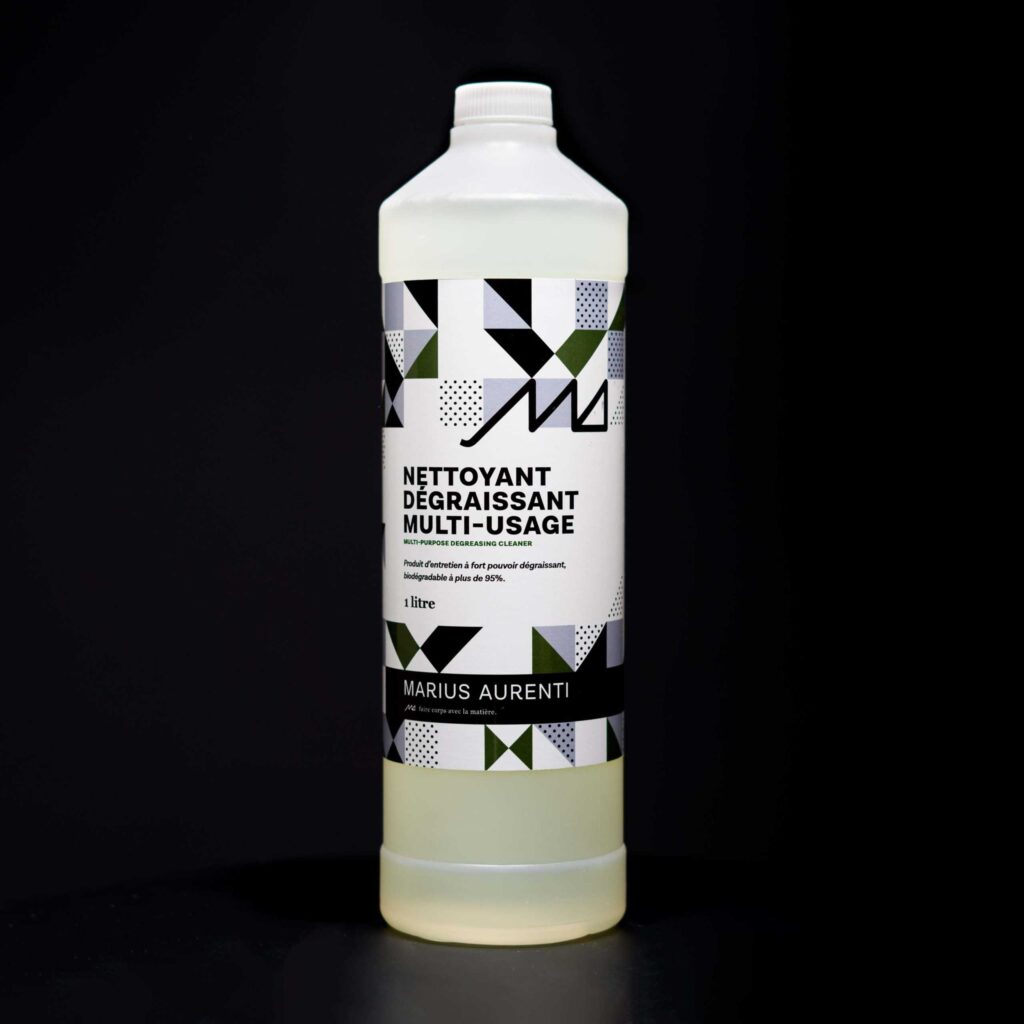
Multi-purpose degreasing cleaner
A professional degreaser, correctly diluted, is suitable for greasy or heavy-traffic areas. It can be used for deeper cleaning, particularly in kitchens or on heavily soiled floors.
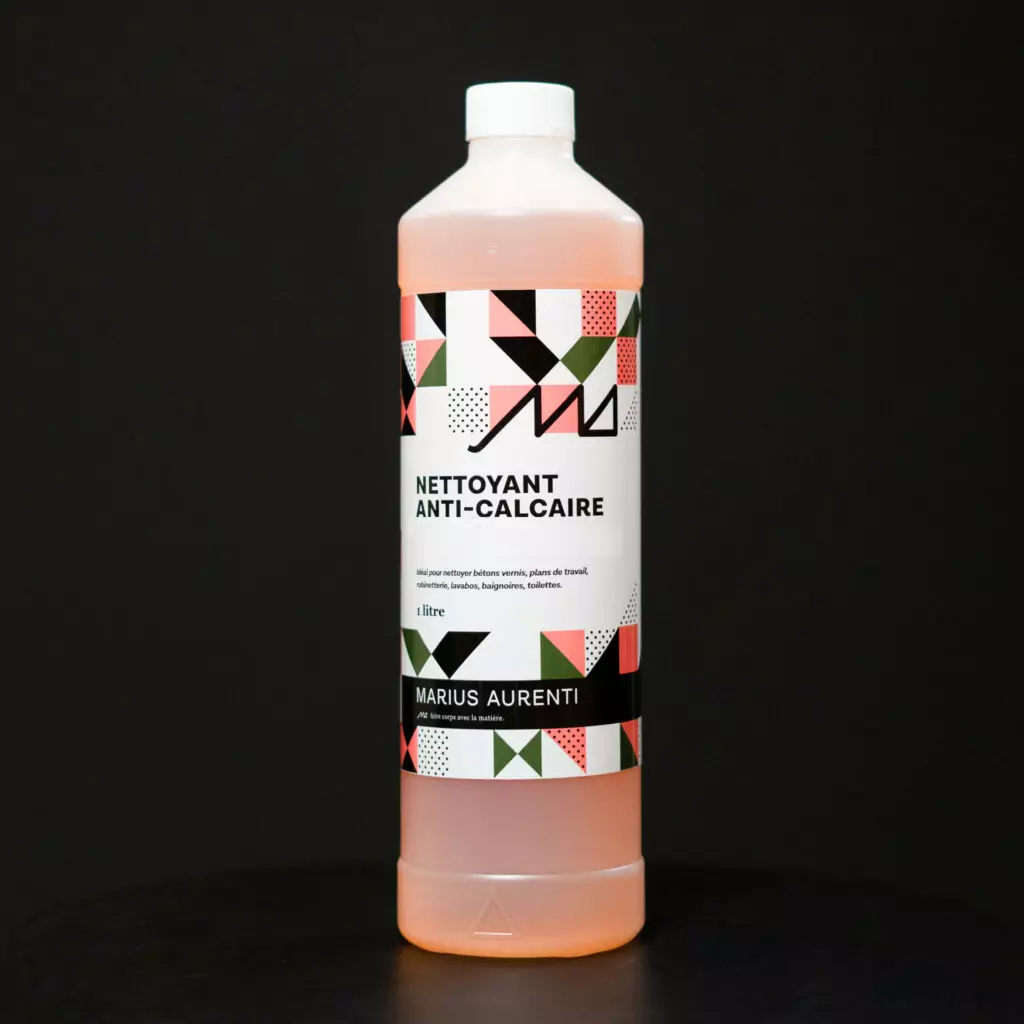
Limescale remover
It is useful in bathrooms, showers, worktops and areas around taps. It treats white limescale deposits, with thorough rinsing after application.
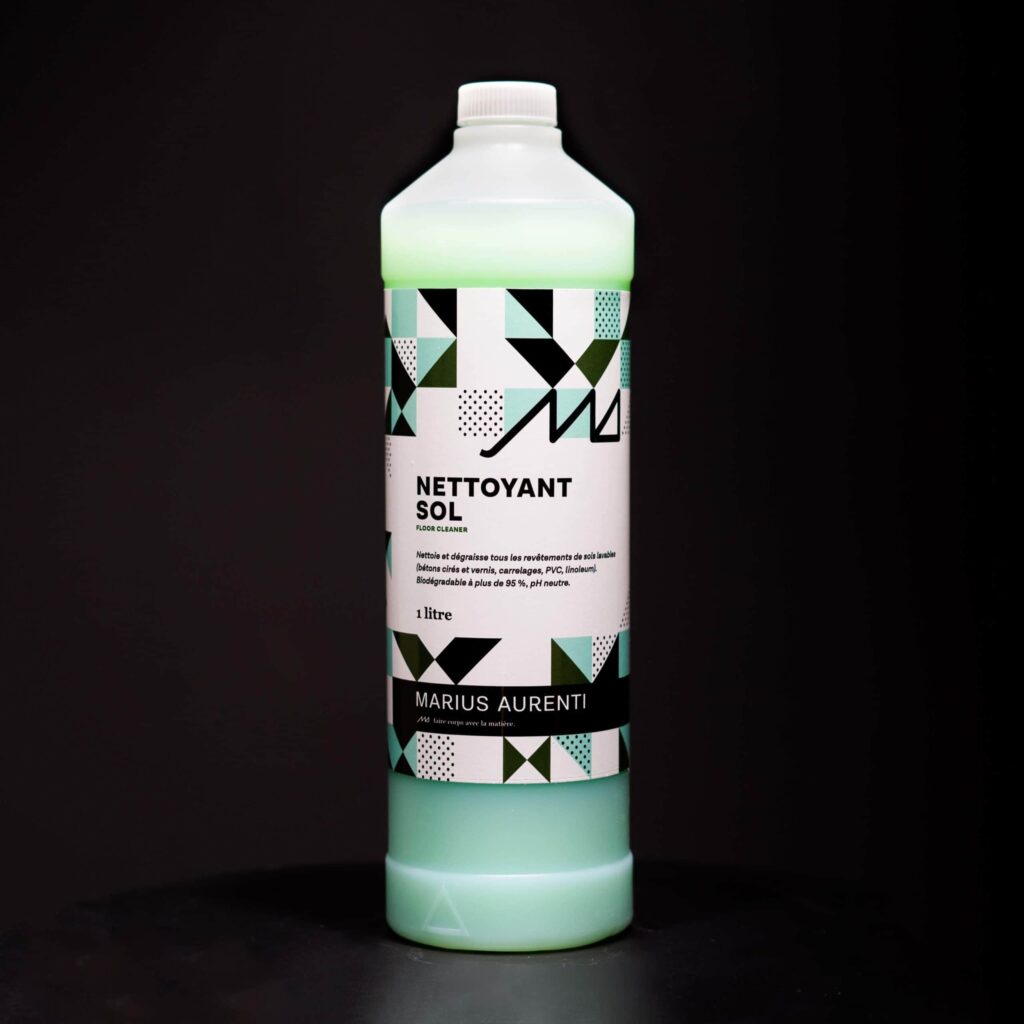
Floor cleaner
A suitable floor cleaner makes it possible to wash poured concrete regularly without altering the finish. It is also suitable for other surfaces such as resins, PVC, tiles or natural stone depending on the products.
Mistakes to avoid with poured concrete
Mistakes to avoid with poured concrete
To preserve the appearance and protection of poured concrete, certain habits should be avoided. Products that are too greasy, too harsh or poorly rinsed can dull the finish, clog the surface or leave marks that are difficult to remove.
Avoid in particular:
- use black soap, linseed oil, Marseille soap or nourishing products, which can leave a greasy film and clog the surface; ;
- use an unsuitable standard household cleaner, such as a standard multi-surface product; ;
- wash thoroughly with plenty of water without rinsing properly, as product residue can build up and dull the finish; ;
- leaving water to stagnate for several hours, particularly in a shower, around a sink or under a damp carpet; ;
- place a wet object permanently on the surface; ;
- ignoring a leak, seepage or repeated condensation; ;
- rub with a green sponge, a wire wool pad or any other abrasive; ;
- placing a hot dish directly onto polished concrete; ;
- cutting directly on a polished concrete worktop; ;
- waiting too long before cleaning a stubborn stain like oil, ink, bleach, vinegar or a chemical.
The golden rule for maintaining poured concrete is simple: it is better to clean regularly with the right products, without an excess of water or greasy products. Gentle and regular maintenance is enough to preserve the appearance of the surface for many years.
You wish to carry out a project in polished concrete Toulon Where abouts polished concrete Hyères Clavel Rénovation works on the polished concrete throughout the Var. For your products, find our selection of Marius Aurenti polished concrete maintenance products recommended for the maintenance of your flooring.